
Why Dragons Still Rule Fantasy Books (And Why We Keep Falling for Them)
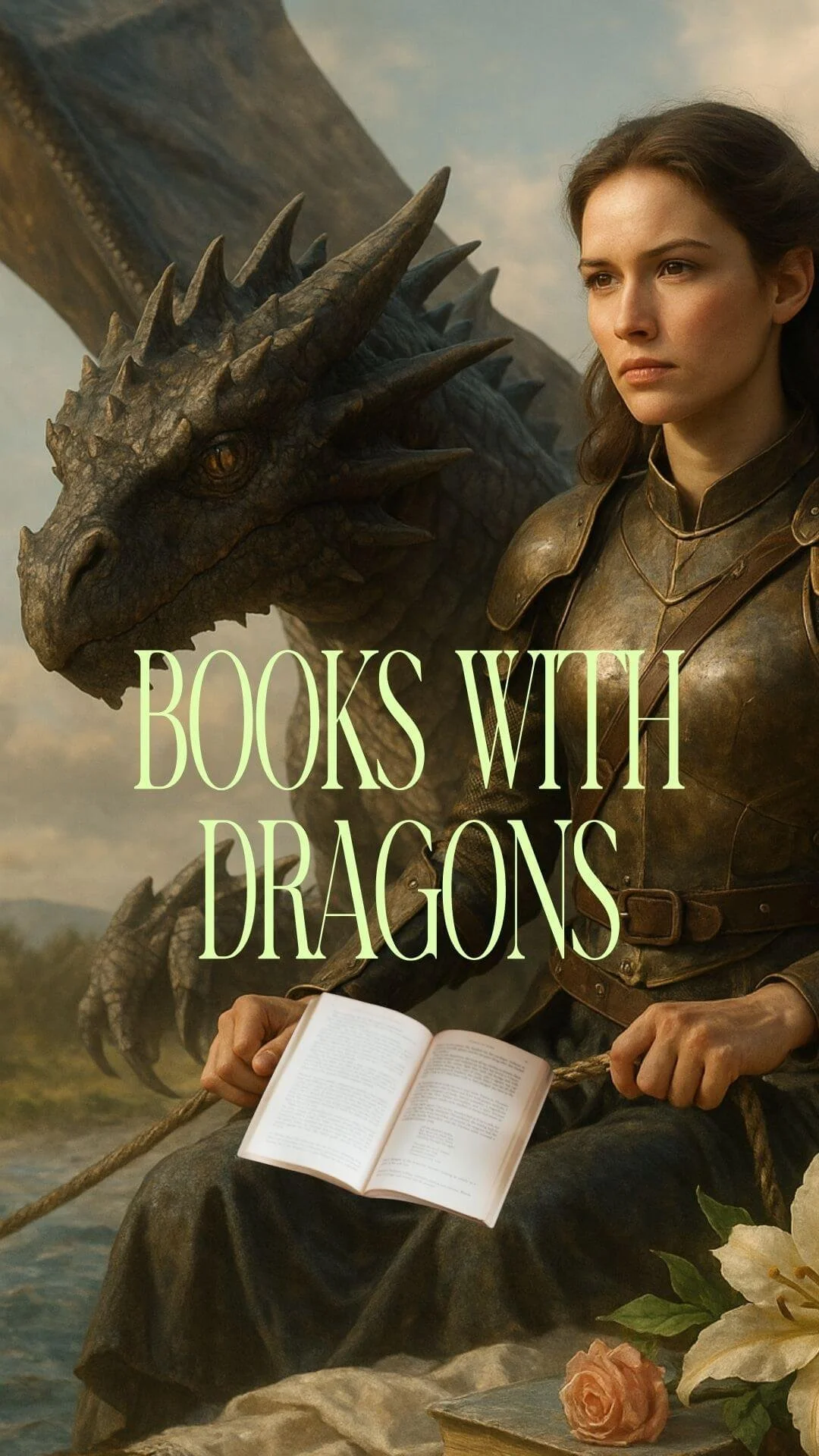
The There’s something about dragons that refuses to fade.
They’re ancient and dangerous, yes — but they’re also deeply comforting. Dragons promise a world that feels bigger than ours, older than ours, and somehow more meaningful. A world where magic still matters and power has a physical form.
For many readers, dragons were the first truly awe-inspiring creatures they ever met in fiction.
Maybe, for you, it was The Hobbit, with Smaug coiled around his stolen gold, equal parts terror and elegance. Maybe it was Eragon, where bonding with a dragon meant destiny, responsibility, and a future you couldn’t escape.
Or maybe it’s happening right now, with Fourth Wing, where dragons choose their riders — and reject the unworthy without mercy. (And yes, Fourth Wing specifically was a crazy combination because there were also bonding dragons involved!)
In modern fantasy — especially romantasy — dragons have become more than mythical obstacles or epic weapons. They’re mirrors (and super nice to look at!). They reflect our heroines’ fears, desires, and inner power. Sometimes they’re protectors. Sometimes judges. Sometimes the only ones who truly see the protagonist for who she is.
And in a genre that thrives on emotional intensity and escapism, dragons are the perfect companions in books. Let’s have a look at why!
The Best Books with Dragons
Why Dragons Are Having a Cultural Comeback (Again)
Dragons never really disappeared, obviously — but right now, they’re everywhere. And if you haven’t been living under a rock, you’ve seen them spreading their wings.
On BookTok. (Especially there! OMG!) On romantasy shelves, obv. And, yes… On special editions with sprayed edges and dragon-shaped foiling.
And that, my friend, is probably not a coincidence.
We’re living in a time where readers crave emotional escapism. (Which is also the reason that romantasy and cozy romantasy are on the rise.) Not shallow distraction (don’t anyone dare to say that - hellooo?!), but stories that feel immersive, intense, and comforting at the same time. Dragons deliver exactly that.
They’re fantasy at its most unapologetic.
Dragons pull us into places where the rules are different — where power is visible, magic is dangerous, and choices matter. In uncertain times, that kind of clarity is incredibly… appealing.
It’s like having a horse but it’s big and has wings and magic powers and probably it can kill all your enemies with its fire. Now THAT’s cool!
Add romantasy to the mix, and dragons suddenly become emotional amplifiers:
They heighten danger without relying on realism
They make bonds literal — rider and dragon, soul and soul
They allow romance to exist in worlds where everything is at stake
Modern dragon stories aren’t just about slaying beasts anymore. No. Nooo! They’re about coexisting with power, negotiating trust, and learning how to wield strength without losing yourself.
They totally work in stories when the protagonists (or whoever has the dragon) fight about getting out of the dark or becoming better people.
That’s why dragons work so well right now — and why they’re not going anywhere.
What Makes a Truly Great Dragon Book?
Not all dragon books are created equal.
A great dragon story isn’t defined by how many battles there are or how spectacular the fire looks on the page. What really matters is relationship. I think people just love it when there is something… happening between the characters and the dragons. Or even among the dragons, if you will.
The best dragon books ask deeper questions:
Do the dragons feel ancient — like they existed long before the story began?
Do they have agency, opinions, and boundaries of their own?
And most importantly: does their presence change the protagonist?
In standout dragon fantasy, dragons are never neutral. They pretty much work as a metaphor or a spirit animal or whatever you want to call it.
Especially in romantasy, dragons often function as emotional truth-tellers. They sense fear, desire, weakness, and power long before the characters admit it themselves (great for the reader! Thanks, dragon). The bond between human and dragon becomes a second narrative layer — one that mirrors romantic tension, inner conflict, and personal growth.
Strong dragon books usually get three things right:
Meaningful bonds: Dragons aren’t pets or tools (even though we can feel protective over them… like a cat!). They choose, reject, test, and protect. Oh, and they can also kill you. Just saying.
Integrated worldbuilding: Dragons shape politics, warfare, magic systems, and culture. Remove them — and the world would collapse.
Emotional stakes: Every interaction with a dragon has consequences. Trust matters. Betrayal hurts. Power comes at a price.
When all of that comes together, dragons stop being spectacle — and become story. I guess that’s also why everyone goes so crazy about them. Me included :-)

The Best Dragon Books: A Curated Guide for Fantasy & Romantasy Readers
Instead of one long list, it makes more sense to group dragon books by reading experience. Not every reader is looking for the same kind of dragon story — and that’s a good thing.
Romantasy Dragons: Fire, Bonds & Emotional Chaos
Fourth Wing – Rebecca Yarros
This series didn’t just revive dragon fantasy — it probably reshaped it for a new generation. Brutal trials, deadly dragons, and a romance that burns under constant pressure. The dragons are intelligent, unforgiving, and deeply involved in the story’s emotional core.
When the Moon Hatched – Sarah A. Parker
Lush, intense, and unapologetically dark. The dragons here feel alien and dangerous, embedded in a world that doesn’t soften its edges. Perfect for readers who want romantasy with teeth.
Classic Dragon Fantasy: Timeless and Influential
Eragon – Christopher Paolini
A foundational modern dragon story. The bond between Eragon and Saphira set the standard for rider-and-dragon relationships for decades. Ideal for readers who love epic journeys and clear moral arcs.
The Hobbit – J.R.R. Tolkien
Smaug remains one of the most iconic dragons in literature. Intelligent, arrogant, terrifying — and unforgettable. A reminder that dragons don’t need romance to dominate a story.
Dragons, But Make It Different
A Natural History of Dragons – Marie Brennan
Memoir-style fantasy with a scientific lens. Instead of warriors and riders, this series focuses on observation, curiosity, and discovery. Refreshingly unconventional.
His Majesty’s Dragon – Naomi Novik
Alternate history meets dragon warfare. Emotional, clever, and surprisingly tender in its exploration of companionship and duty.
When Dragons Meet Romantasy Magic
Romantasy thrives on heightened emotion — and dragons are the ultimate emotional accelerators.
They embody everything romantasy explores: power, vulnerability, desire, fear, and transformation. A dragon bond often reflects the romantic arc itself — built on trust, tension, and the risk of loss.
And yes, sometimes dragons come with very attractive humanoid forms.
But even when they don’t, they still serve the same purpose: forcing characters to confront who they are when faced with something stronger than themselves.
That’s why romantasy and dragons are such a natural fit — and why readers keep coming back for more.
Why Dragons Work So Well in Romantasy (Specifically)
Unlike many other fantasy creatures, dragons don’t dilute romantic tension. They can kind of be there and add to the mix.
Dragons also externalize power dynamics in a way that feels safe for readers. When a heroine stands beside a dragon, her strength doesn’t need to be explained or justified. It’s visible.
In romantasy, dragons frequently act as emotional truth-tellers. They sense fear, desire, hesitation — as said, this is great because usually it happens befor the protagonist themselves notices.
And yes, sometimes dragons come with very attractive humanoid forms (depending on the genre). But even without that, they serve the same narrative function: forcing intimacy, honesty, and growth under pressure.
That’s why romantasy and dragons feel less like a trend — and more like a natural evolution of the genre.
Dragon Tropes Readers Secretly Love (Even If They Pretend They Don’t)
Dragon stories come with their own emotional shorthand — and readers recognize it instantly, like *blink* and you know.
Some dragon tropes just work, no matter how often we claim to be tired of them.
There’s the dragon who chooses the “wrong” rider. Not the strongest. Not the most obedient. But the one who refuses to break. That moment alone can carry an entire book. (See: Fourth Wing!)
Then there’s the ancient dragon who knows everything.
Readers also have a soft spot for the injured dragon trope. A wounded creature that forces the story to slow down, shift focus, and create intimacy where there was once only fear or awe.
And let’s not forget the classics:
The dragon who refuses to serve kings.
The forbidden bond no one was supposed to survive.
The dragon whose loyalty is absolute — once it’s earned. Think a dog’s loyalty, but paired with giant wings and… fire.
These tropes endure because they aren’t really about dragons at all (I think you can say that this is an ongoing theme in this article. You might have noticed until now). They’re about trust, choice, and the quiet hope that something immensely powerful might choose you.
Dragons vs. Other Fantasy Creatures: Why Dragons Always Win
Fantasy is full of iconic creatures, each carrying its own emotional promise. It’s the reason I and so many others just loooove fantasy!
You can have clear roles such as these classics:
Vampires seduce.
Fae manipulate.
Werewolves protect their pack.
You know, you know, all that stuff. But note that nobody quite know what dragons would “do” in that list! Or would you? I would not. Dragons, however, represent something else entirely.
Dragons don’t want to belong, they want to choose.
That autonomy is what sets them apart (I think they really are more fantasy “cats” that I thought when I wrote that above). Dragons aren’t bound by courts, curses, or bloodlines in the same way other creatures often are. They operate on their own moral axis.
Where fae stories often revolve around deception and shifting rules, dragon stories lean into clarity. When a dragon makes a choice, it means something and you kind of think: Oh, wow, this dragon likes me. When it offers protection, it’s ab-so-lute. When it turns away, there’s no negotiation. Like, literally, it could burn you and kill you. Over and out.
That’s why, no matter how crowded the fantasy shelf becomes, dragons always hold their ground.
The Future of Dragons in Fantasy: What We’ll Likely See Next
Dragons have always evolved with the stories we tell about power.
And right now, that evolution is accelerating.
The next wave of dragon fantasy is (probably? moving away from simple obedience and spectacle. Instead, we’re seeing dragons written as morally complex beings — creatures with their own politics, history, and internal conflicts. Not good. Not evil. Just ancient, powerful, and deeply invested in their own survival.
One clear shift is the move from command to negotiation.
Modern dragons don’t exist to be controlled. They aren’t weapons to be deployed or symbols to be conquered. Relationships with dragons increasingly revolve around consent, compromise, and uneasy alliances. Riders don’t command — they bargain. And sometimes, they lose.
Another emerging trend is dragons as political actors.
Rather than existing on the margins of the world, dragons are becoming central forces within it. They influence wars, shape borders, destabilize kingdoms, and challenge human authority simply by existing. Their power isn’t just physical — it’s strategic.
Perhaps the most intriguing development, though, is the rise of the dragon perspective itself. Which is SO cool! ✨
Stories are beginning to experiment with dragons as narrators or focal points. Not fully humanized, not reduced to mascots — but allowed their own voice, logic, and emotional range. When dragons tell their own stories, fantasy shifts. The world stops revolving solely around human ambition and starts acknowledging older, more enduring priorities.
So, here in bullet points again:
more morally complex dragons
less obedience, more negotiation
dragons as political actors
dragons as narrators (👀)
More Dragons? Always.
If this list only made your TBR longer, you’re doing it right.
Browse BookTok, fall down Pinterest rabbit holes, or simply scan bookstore shelves for dragons on the cover. The genre is evolving fast — and dragons are evolving with it.
New worlds, new bonds, new kinds of magic.
And plenty of fire left to burn. *noise of cracking fire*
❦
