
Interview: Meet Maria Spada, the Cover Designer of My New Romantasy Series
This summer, I am publishing the prequel to my new Romantasy series.
And as you know: A great book cover does more than look pretty.
It creates a promise, sets the mood, and tells readers what kind of world they are about to step into.
For my new Castlecore Romantasy series, Silver Realms, I knew I wanted covers that felt romantic, atmospheric, and just a little enchanted.
That is why I was so excited to work with cover designer Maria Spada, whose work blends soft fantasy visuals with a strong sense of genre and marketability. Maria designed the covers for Book 0 (get the prequel for free here), Book 1, and Book 2 of the series already, creating a cohesive visual identity while still giving each book its own unique feeling.
In this interview, she shares how she became a cover designer, what makes a strong Romantasy cover, and why professional design matters so much for self-publishing authors today.
We also talk about her creative process, the balance between intuition and strategy, and the details readers might not notice at first glance. I hope you enjoy this behind-the-scenes look at the art and thinking behind the Silver Realms covers.
Dear Maria, I was so happy when you said yes to designing the covers for my new Castlecore Romantasy series! I think you captured the exact vibe I was hoping for. How did you end up becoming a cover designer? What led you down that path?
My life has always revolved around books. I'm a reader, a book collector, and I even used to sell secondhand books, and now I design covers! In my late teens and early twenties I was already doing graphic design work, but it wasn't until 2016, when I landed a job at a publishing company, that I began designing book covers professionally.
I left the company in 2019 due to transportation difficulties related to my anxiety disorder and started freelancing from home instead. What began as a necessity turned into a career I truly love. Designing book covers allows me to combine my passion for books with my love for visual storytelling.
Which genres do you most enjoy designing book covers for?
I enjoy working across many genres because I love the creative challenge each one brings. But my forte is fantasy, paranormal, and contemporary romance.
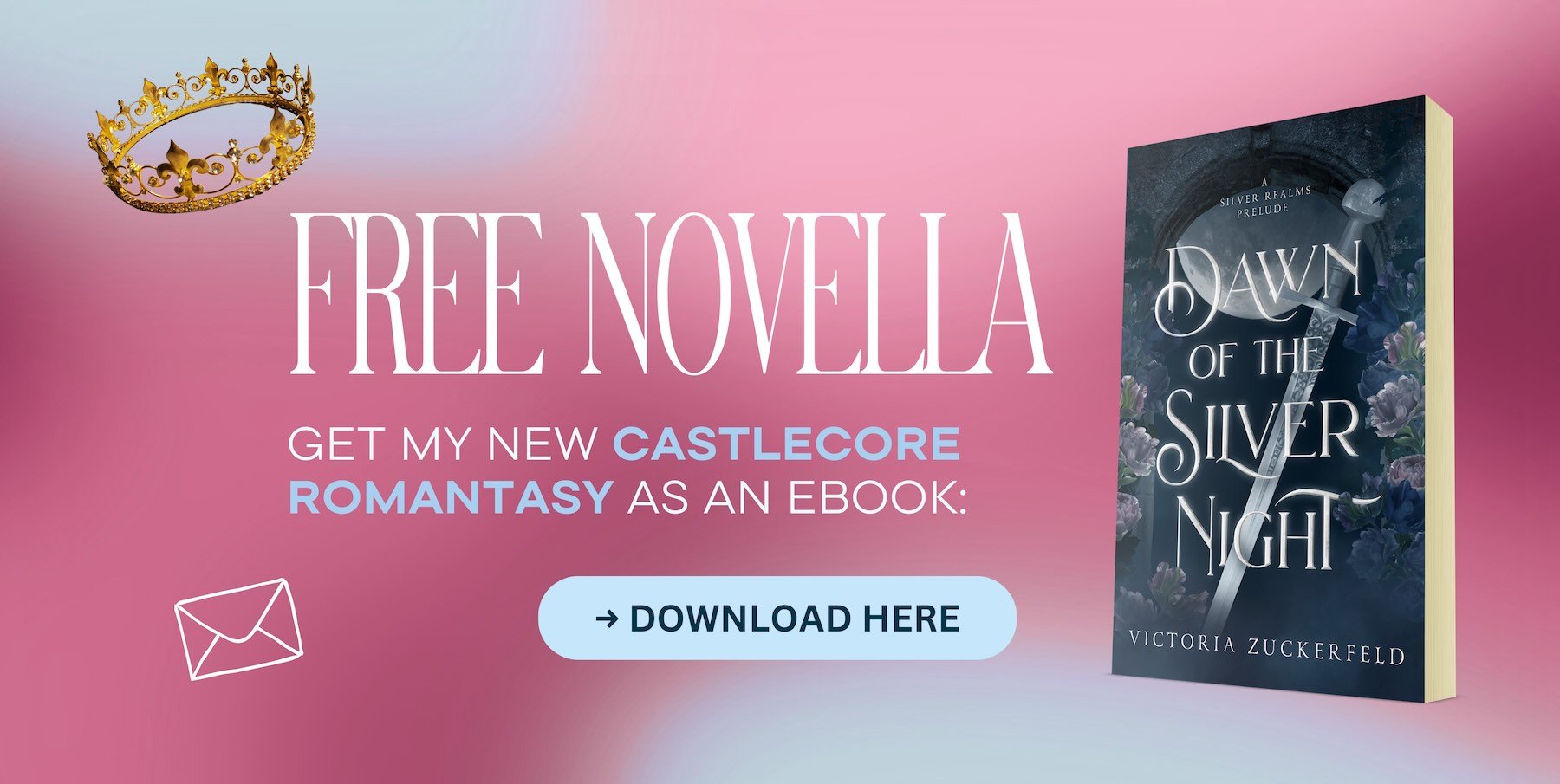
(By the way, this is the ebook - a free series prequel - for which Maria designed the cover:)
What do you think sets Romantasy or fantasy romance covers apart from fantasy in general?
Romantasy tends to have a softer, more emotional tone than traditional fantasy. While epic fantasy often focuses on action or worldbuilding, romantasy emphasizes mood and emotional connection.
The covers often reflect this through softer lighting, romantic symbolism, and more delicate visual elements.
What makes a strong Romantasy book cover for you?
A strong romantasy cover has a sense of atmosphere and emotion. Elements like flowers, mist, soft lighting, and subtle textures help create a dreamy, romantic feeling.
What does your cover design process usually look like from start to finish?
I usually begin by sketching ideas on paper with a pencil. I know it's very millennial of me, but sketching helps me feel more connected to the creative process and gives me more freedom to explore ideas. These sketches are usually quite messy, full of arrows, scribbles, and notes about title placement and visual elements, but they help me map out the design.
After that, I begin searching for stock photos, which is often the most time-consuming part of the process. Finding the right elements is essential to making the cover feel cohesive and believable.
Once I have the materials I need, I move into the digital stage and slowly bring the sketch to life. That part is always the most enjoyable for me, watching the concept take shape piece by piece.
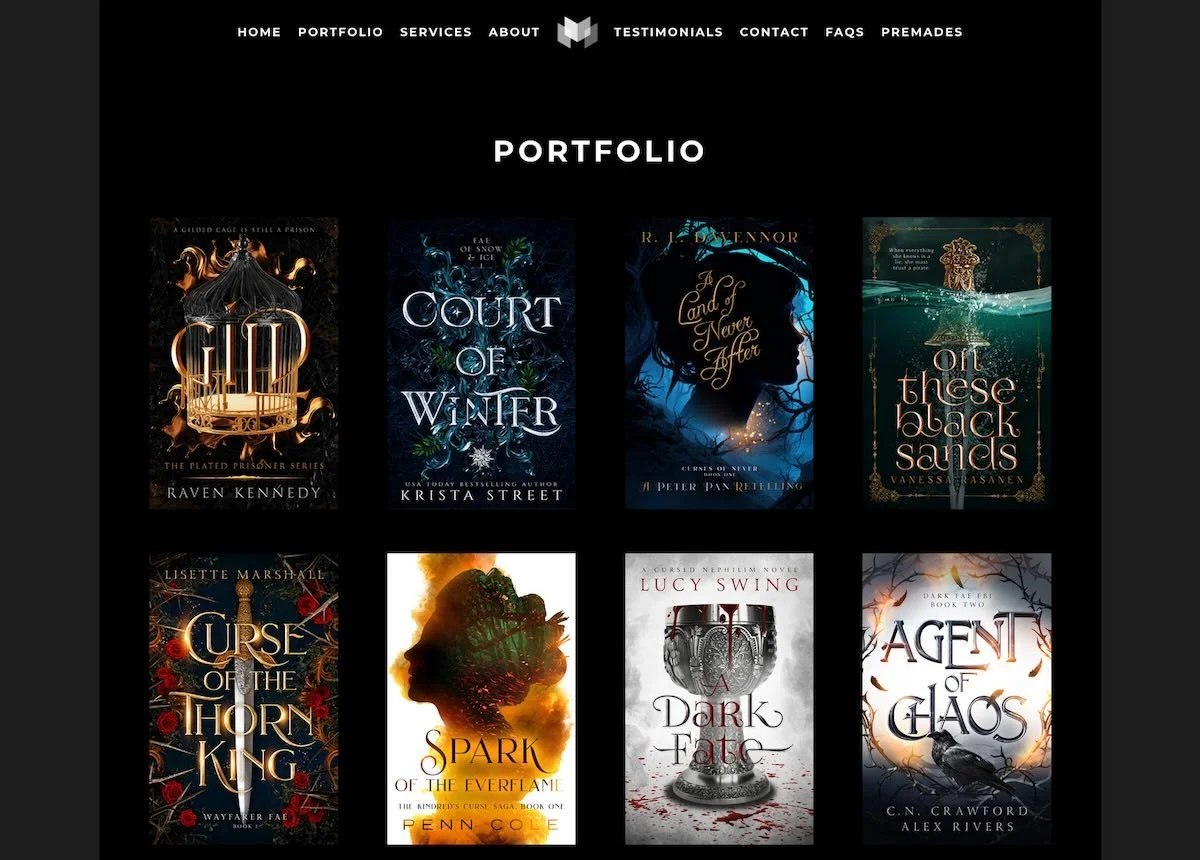
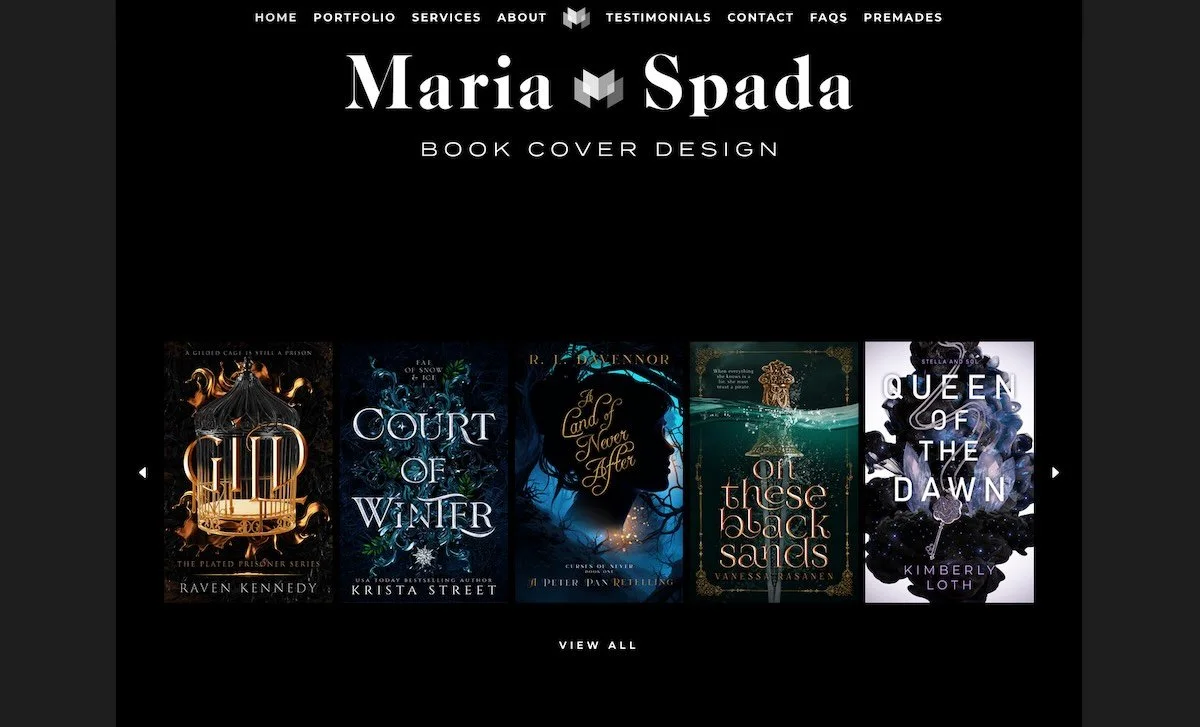
A glimpse on Maria’s portfolio
What kind of input do you need from an author to create your best work?
The most important thing for me is understanding the feeling the author wants the cover to convey. Mood and tone are just as important as plot details. I also appreciate having inspiration images or reference covers.
Even though I always aim to create something unique, my goal is also to make the book marketable and appealing to readers within the genre. Clear communication at the beginning makes the whole process much smoother.
How much of your process is intuition — and how much is strategy?
I would say my process is about 50% intuition and 50% strategy.
The intuitive side comes from experience and artistic instinct, like choosing colors that feel right, balancing elements visually, and creating an emotional tone that matches the story. Often I can sense when a design "feels right," even before I analyze why.
The strategic side is just as important. I consider genre expectations, readability at thumbnail size, typography hierarchy, and market trends. A cover needs to look beautiful, but it also needs to function as a marketing tool. The best designs are the ones where intuition and strategy work together.
How does designing a series differ from designing a standalone book?
When I design a standalone book, I focus entirely on making that one cover as strong and complete as possible without worrying too much about future continuity. With a series, I think more long-term. I plan which elements should stay consistent such as frames, color palettes, typography, or backgrounds and which elements will change from book to book. This helps the series feel cohesive while still allowing each cover to have its own identity.
How did you make sure Book 0, Book 1, and Book 2 feel cohesive, yet distinct?
I focused on maintaining the same tone and atmosphere across all the covers so they feel like they belong to the same world. The color palette stays consistent--soft, muted tones that reflect the romantic mood of the series.
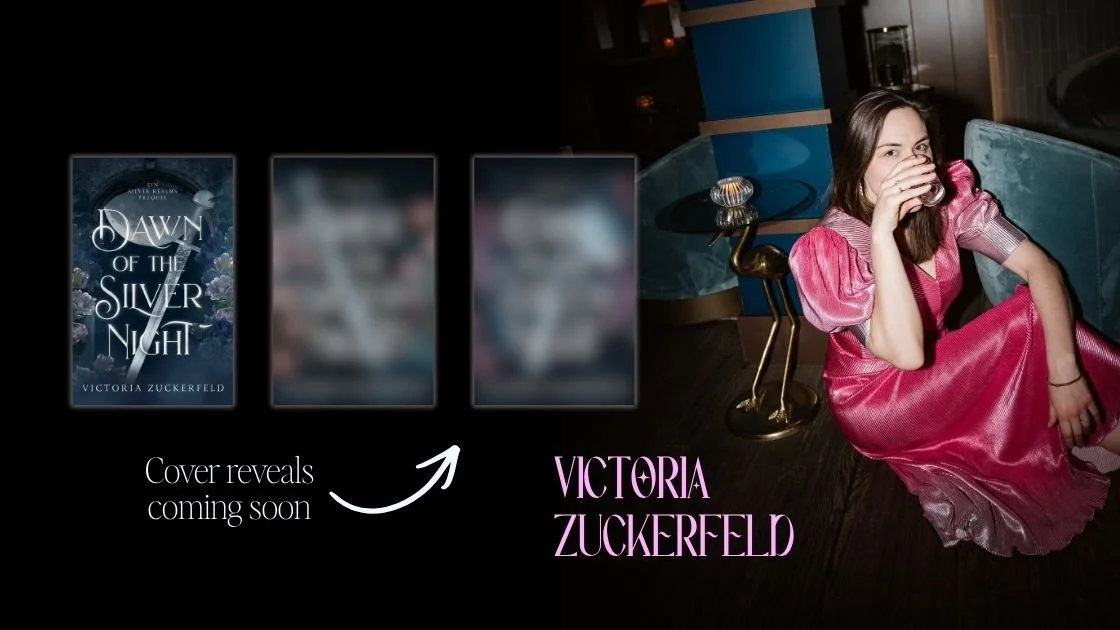
At the same time, each book has its own unique elements. For example, the flowers change from cover to cover, symbolizing different parts of the story, but they all share the same gentle color treatment and lighting. This creates a sense of continuity while still making each book visually distinct.
Typography, framing, and composition also remain consistent, which helps readers immediately recognize the books as part of the same series.
About the book covers you created for my new Romantasy series Silver Realms: What was the biggest creative challenge while working on this series?
I really enjoyed working on it. I think the biggest challenge is adding colors and the shadows and making sure all the elements are visible including those in the background.
Is there a small detail on the covers that readers might overlook, but that’s especially meaningful to you?
I think it's how I treat author names and series titles. I always make sure that the sizing is always just right and clear, and does not compete with the title.
Why is professional cover design more important than ever — especially for Amazon and social media?
I respect authors who design their own covers, especially when working with a limited budget. But working with a professional designer often makes the process smoother and results in a cover that is more effective in the marketplace.
Online bookstores and social media are highly visual spaces. Readers often make quick decisions based on first impressions, and covers with strong visual impact naturally attract more attention. A professionally designed cover can help a book stand out and reach a wider audience.
What should self-publishing authors look for when choosing a cover designer?
Authors should look for a designer with a clear and consistent portfolio, good client feedback, and professional communication.
An active online presence and reliable contact information are also important, especially today when scams unfortunately target the writing community. And those who don't use generative AI.
What are common mistakes you see in DIY or low-budget fantasy covers?
One common mistake is trying to include too many elements at once. This can make the cover feel cluttered and confusing.
On your website, you mention that you're a bookseller and collector as well. What are some of your favorite books?
I grew up reading literary fiction and postmodern works, and in my late twenties I developed a love for classic fantasy. Vonnegut is my hero, so all of his books! And the works of Ursula LeGuin.
Where can readers and authors find your work, and what kinds of projects do you love working on most?
My website and my socials (Instagram here). I don't just do cover designs, but other stuff as well, and hopefully this year I will start taking interior illustrations <3
Thank you so much, Maria!
❦
PS: Check out all of Maria’s covers for my series as they get published here.
